
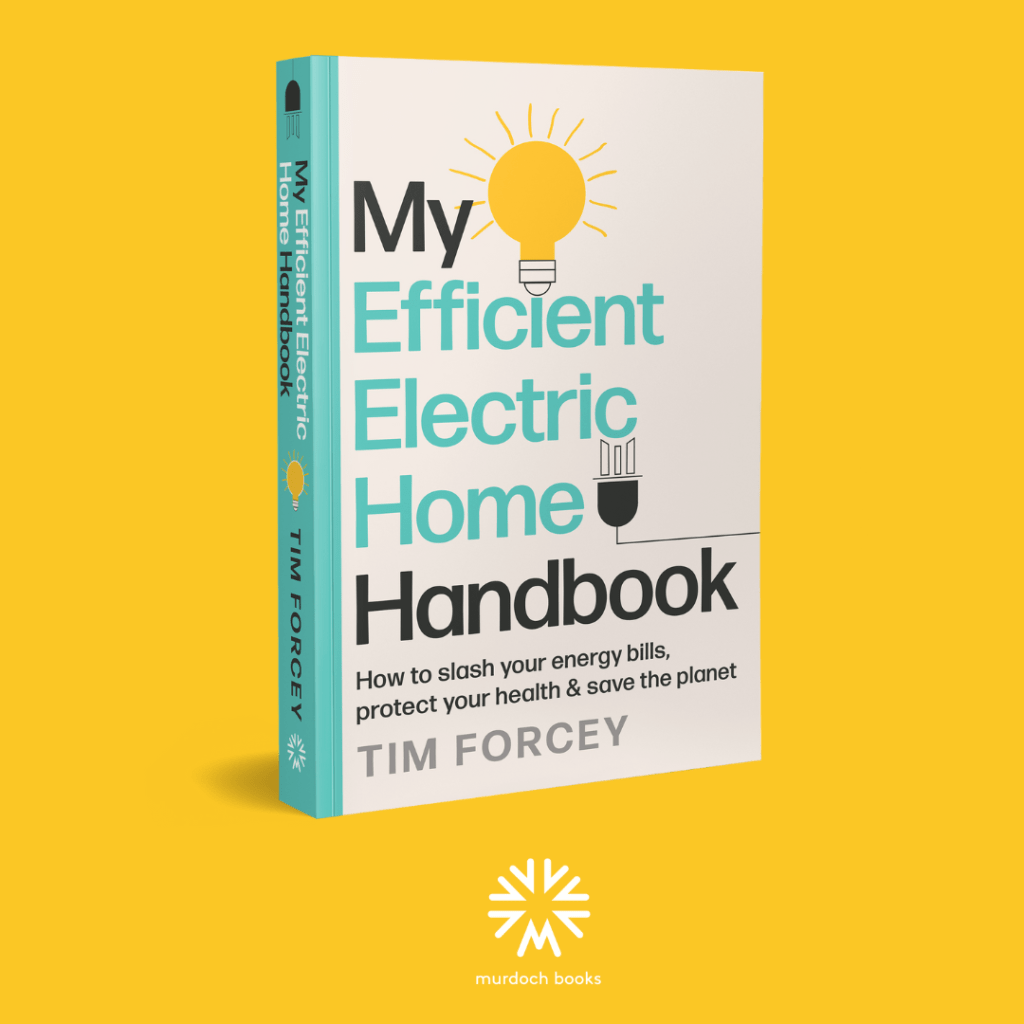
Tim Forcey’s “My Efficient Electric Home Handbook: How to slash your energy bills, protect your health & save the planet” offers valuable insights into creating an energy-efficient and comfortable home, particularly for those living in Victoria. Here are some key takeaways from the book:
1. Split Systems for Efficient Heating and Cooling
Efficiency of Split Systems:
- Split systems are the most cost and energy-efficient form of heating and cooling in Victoria.
- They outperform hydronic heating and ducted electric reverse cycle systems in terms of efficiency.
Issues with Ducted Systems:
- Ducted reverse cycle air conditioning relies on free airflow from outlets to the return air intake.
- The system fails to work properly if doors are closed between areas, leading to:
- Heat escaping from positively pressurised rooms.
- Unconditioned air being drawn into negatively pressurised rooms.
- The vents leave large gaps in insulation, reducing overall efficiency of the house.
2. Importance of Controlled Ventilation
Sealing and Ventilation:
- After sealing gaps in insulation and the building envelope, it’s crucial to purge stale air (containing VOCs, carbon dioxide, radon, etc.) in a controlled way.
Methods for Purging Air:
- Regularly open doors/windows.
- Install an automatic trickle ventilation system.
Air Quality Monitoring:
- Use air quality and carbon dioxide sensors to monitor indoor pollutants if manual purging is preferred.
3. Proper Use of Exhaust and Rangehoods
Drawing Fresh Air:
- Open doors/windows a crack when using exhaust and rangehoods during cooking or bathing to draw in fresh air.
- Using doors and windows ensures fresh air is drawn through clean openings to prevent it from being sucked through dirty or mouldy cracks in the building envelope.
4. Managing Thermal Mass
Thermal Mass Considerations:
Excessive thermal mass can be problematic:
- It becomes difficult to cool down after a series of scorching days, especially in areas with low diurnal swing (similar day and night temperatures).
- In winter, thermal mass can cool a room quicker than it can heat up.
Importance of Insulation:
- A continuously well-insulated and sealed building envelope is more crucial than relying on thermal mass alone.
5. Thermal Comfort Without Passivhaus Standards
Well-Designed Building Envelope:
- In Victoria’s temperate climate, you don’t need Passivhaus construction to achieve thermal comfort and minimise energy use.
- A well-designed building envelope with good insulation and sealing is sufficient.
Passivhaus Relevance:
- The extremely low air changes in Passivhaus design are more critical in extreme climates than in Victoria’s temperate conditions.
6. Maximising Solar Panel Installation
Solar panels should only be considered after optimising the thermal performance of the building envelope, heating, cooling and hot water systems.
Solar Panel Investment:
Install as many solar panels as possible, as soon as possible, to:
- Minimise installation costs.
- Maximise rebates that are continuously decreasing.
Capacity Consideration:
- The solar panel capacity should be based on winter demand as this is the most energy intensive season of the year.
7. Home Batteries: Current Viability
Payback Period:
- The payback period for home batteries currently exceeds their expected lifespan, making them not financially viable yet.
Future Prospects:
- Electric vehicle batteries, which are about seven times the size of standard home batteries, might eventually be used for home storage.
- This option is not yet available in Victoria.
These insights from Tim Forcey’s handbook provides answers to conundrums I’ve been pondering, along with practical advice for creating an energy-efficient and comfortable home in Victoria. By focusing on a well-designed building envelope, the best heating, cooling and hot water systems, managing ventilation and thermal mass, and maximising solar energy, homeowners can achieve significant energy savings and improved comfort.
Purchase My Efficient Electric Home Handbook by Tim Forcey via this link.
 Architecture with Angie