
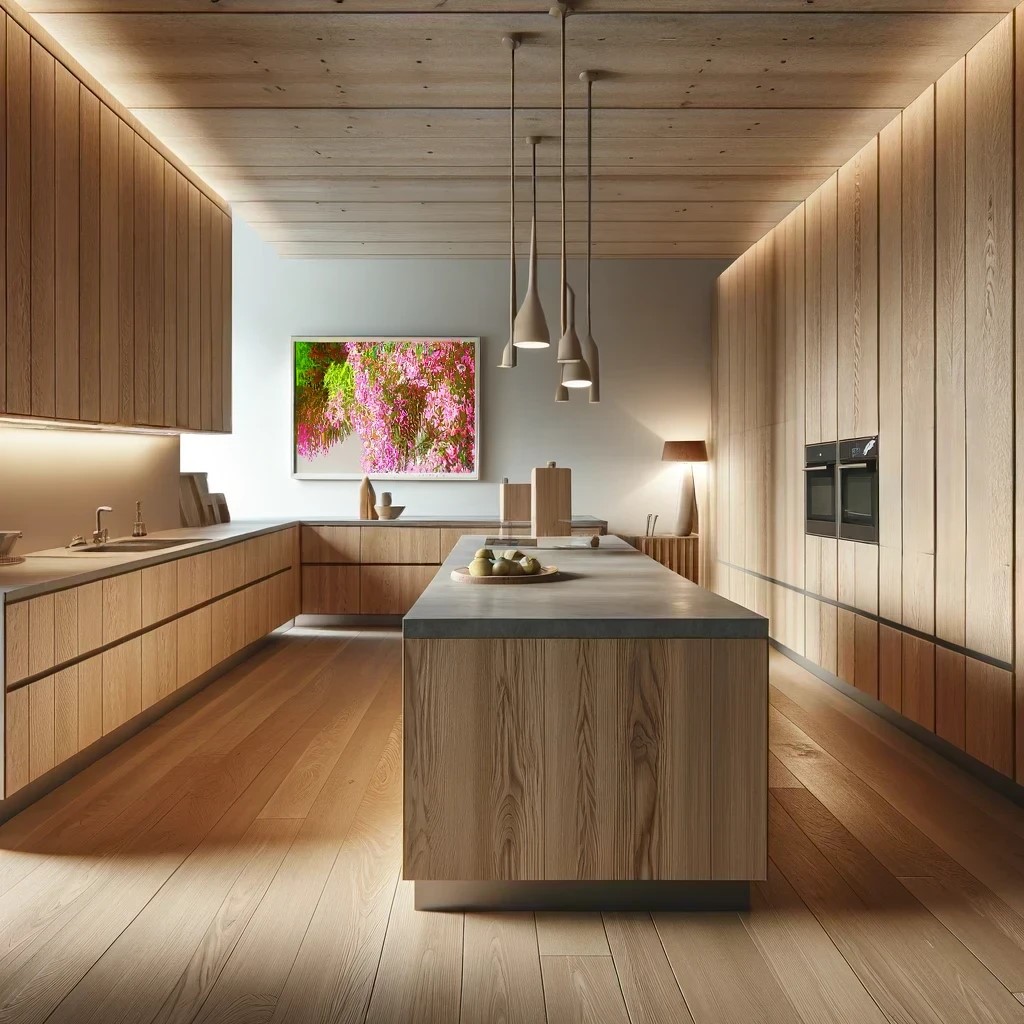
In the philosophy of contemporary architecture, the kitchen is not just a place for preparing food; it is the heart of the home and a critical area for promoting health and wellness. For new homeowners and renovators, designing a kitchen that considers the quality of materials, the efficiency of the layout, and the functionality of appliances is essential. This blog post will guide you through creating a kitchen space that aligns with the principles of healthy living and sustainability.
Choosing the Right Materials
1. Countertops
- Timber: Dense Australian hardwoods are suitable for most benchtops, depending on the species, cut and treatment. It’s an excellent choice for kitchen countertops because it does not release harmful chemicals into the environment. To keep a timber benchtop looking its best over time, marks can be sanded out and surface treatments, such as oils and waxes, can be easily reapplied. Though natural, timber can still take some time to off-gas. This can smell pleasant for many people but for others with sensitivities timber may not be suitable. Timber can also be sensitive to heat. Furthermore, naturally treated timber can provide a level of hygroscopicity to a room to assist with humidity.
- Solid Surface: Solid surface benchtops are commonly made from a blend of acrylic resins, minerals, and pigments. They can be shaped into almost any form and, like timber, can be buffed back when marks appear over time. Solid surface materials are non-porous, which means they do not absorb liquids, making them resistant to stains, bacteria, and mold growth. This attribute is excellent for maintaining a clean and healthy kitchen environment. Solid surfaces can also take some time to offgas and are are sensitive to heat.
2. Cabinetry
- Solid Wood: Choose solid wood cabinets finished with natural oils or waxes to avoid off-gassing of harmful chemicals. Wood is durable, and when sourced responsibly, it supports sustainable forestry practices.
- Bamboo: Bamboo is fast-growing and renewable, making it an eco-friendly alternative for kitchen cabinets. It’s also naturally resistant to pests such as termites.
Efficient Kitchen Layout
1. The Work Triangle
- Rumour has it that the layout of the sink, refrigerator, and cooktop should form a work triangle. This design principle minimises unnecessary movement, making your kitchen more ergonomic and energy-efficient.
- On the flip side, a well-designed linear kitchen can fit into smaller living and dining areas to maximise space for other functions.
2. Adequate Ventilation
- Good ventilation is crucial to maintaining air quality and removing airborne contaminants produced during cooking. A high-quality range hood that vents to the outdoors can significantly reduce pollutants like nitrogen dioxide and carbon monoxide. Moving the fan and motor to the ceiling, rather than in the rangehood itself, can help minimise noise.
Appliance Selection
1. Energy-Efficient Appliances
- Opt for appliances with a high Energy Rating to ensure they are energy-efficient and have a lesser environmental impact. Dishwashers should also have a high Water Rating Label. Modern induction cooktops are an excellent alternative to gas as they reduce cooking time and energy use. As a bonus, electric cooking does not release vapours directly into the home, unlike other fuel sources like gas and wood.
2. Low EMF Options
- Consider theElectromagnetic Fields (EMFs) emitted by appliances. Induction cooktops, while efficient, do emit higher levels of EMFs. If this is a concern, gas cooktops or traditional electric might be better alternatives if they are available, though they still have their own health and environmental considerations.
3. Smart Kitchen Technology
- Smart refrigerators and dishwashers can optimise energy use and improve convenience. However, choose technologies that enhance functionality without adding unnecessary complexity, EMF pollution or wi-fi. With this in mind, electrical appliances should not be located along walls backing onto the most used places in a house (nor above/below them), such as bedrooms, offices, lounges or play spaces.
Health and Safety Features
1. Non-toxic Flooring
- Choose kitchen flooring like timber, cork or bamboo that is not only durable and easy to clean but also made from natural materials that don’t emit VOCs.
2. Natural Light
- Incorporate plenty of natural light to improve mood and visibility. Consider larger windows if the design allows, enhancing both the aesthetic and the energy efficiency of your kitchen.
Conclusion
Designing a health-conscious kitchen requires careful consideration of materials, layout, and appliances to create a space that supports well-being and sustainability. By choosing non-toxic materials, efficient designs, and safe appliances, you can ensure that your kitchen truly becomes the heart of your healthy home.
For those in Victoria looking to integrate these principles into their home architecture, contact Architecture with Angie.
Transform your kitchen into a sustainable, health-supporting space—get in touch with us today!
 Architecture with Angie