
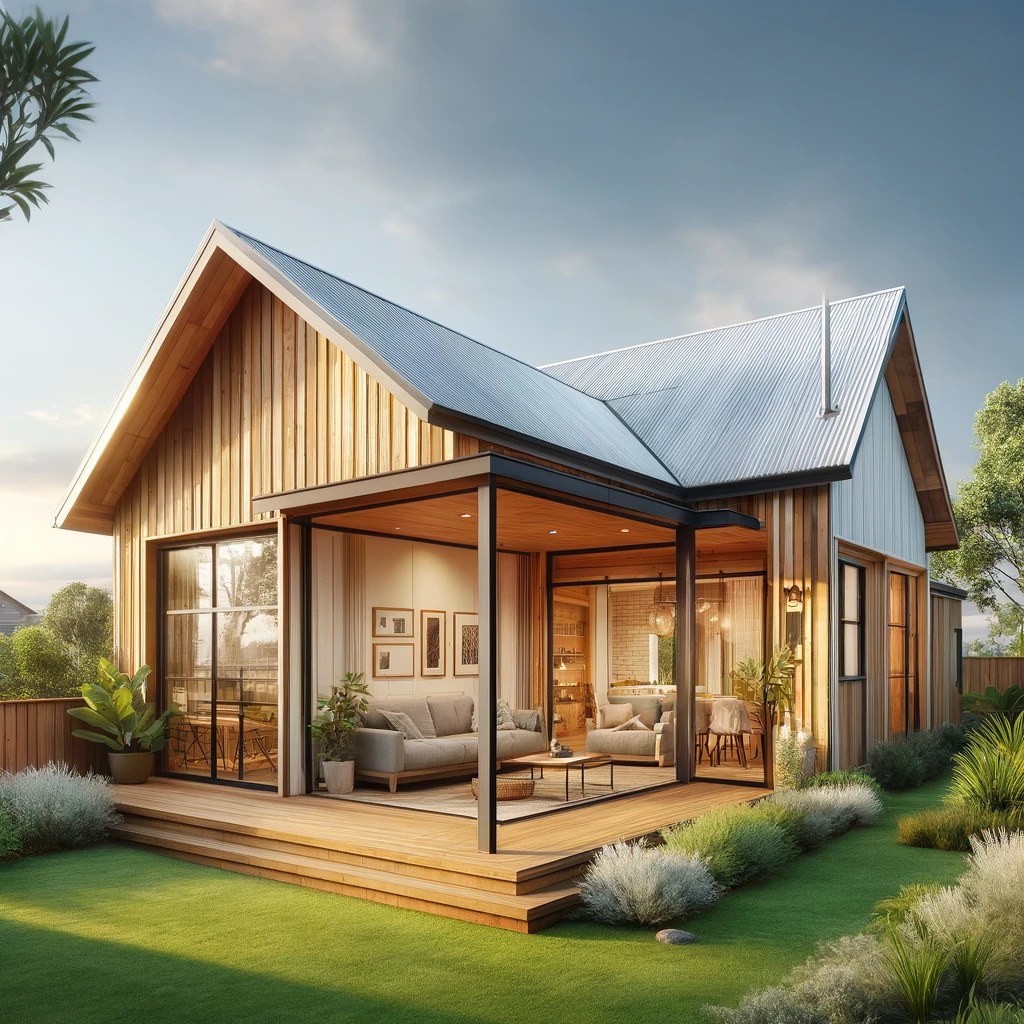
A look at sustainable insulation materials that keep homes comfortable without compromising indoor air quality.
In the spirit of building biology, selecting the right insulation for your home is crucial, not just for keeping warm but also for ensuring the health of your home’s occupants and the environment. Sustainable insulation options have come a long way in Australia, offering solutions that cater to longevity, non-toxicity, pest resistance, and condensation control. Here’s a deep dive into eco-friendly insulation materials that align with the principles of building biology and sustainable architecture.
Why Eco-Friendly Insulation Matters
Insulation is key to reducing energy consumption by keeping homes warmer in winter and cooler in summer. However, traditional insulation options often include materials that can off-gas volatile organic compounds (VOCs) or are treated with chemicals that might impact indoor air quality. Eco-friendly insulation materials, in contrast, provide effective thermal performance while being safer for both your health and the environment.
Top Eco-Friendly Insulation Materials
Not all “eco-friendly” insulation is as friendly or helpful as it seems. Here is a run down of some you may be considering.
1. Sheep’s Wool Insulation Sheep’s wool is a superior natural insulator, readily available in Australia. It is renewable, biodegradable, and has excellent moisture-regulating properties which help in managing condensation effectively. Additionally, wool can absorb, hold, and release moisture while maintaining its thermal qualities. Wool is also naturally flame-retardant, sound-deadening, nontoxic, and biodegradable. Wool can improve the quality of your indoor air by absorbing hazardous substances including formaldehyde, nitrogen oxide, and sulfur dioxide (Malhotra et al. 2022). Unfortunately, wool is susceptible to fabric pests, such as carpet beetles and clothes moths (APCA 2004).
2. Hemp Insulation Hemp is one of the most sustainable plants and its fibres are perfect for insulation. Hemp insulation is known for its durability, moisture resistance, non-combustibility and excellent thermal properties. It also absorbs CO2 during its growth, further reducing the ecological footprint (Breen and Smith 2024). Furthermore, hemp does not attract pests such as rodents, however, can be a food source for silverfish.
3. Recycled Cotton (Denim) Insulation Recycled cotton or denim insulation is made from post-industrial recycled denim fabric. It is treated to be fire, pest-resistant and mould resistant, posing a toxicity risk (Orentas and Pelchen 2022). This material does not contain fibreglass, avoiding irritation and air quality issues commonly associated with traditional insulation, however, the nature of cotton means it is prone to moisture damage (Orentas and Pelchen 2022).
4. Cellulose Insulation Made from recycled paper, mainly newsprint, cellulose insulation is treated with borate for fire and pest resistance. It has a low embodied energy, excellent thermal properties, and is one of the best materials for soundproofing. Initially, the density of cellulose helps prevent airflow, making it highly effective against condensation and heat transfer. In the long term, however, it can become soggy and is likely to settle and compact, limiting its insulating capacbility and creating gaps in all the wrong places (Wallender 2022).
5. Polyester Perhaps a surprise inclusion on the list, polyester is a synthetic fabric that will not decompose. In this instance, a non-renewable material is worth considering given it is generally undesirable for insulation break down. Furthermore, polyester insulation does not absorb water or support mould growth (Efficiency Matrix 2020). Recycled content can be used if a chain of custody can be established to determine the source of the content and mitigate contamination risks associated with recycled building materials.
Considerations for Choosing the Right Insulation
When selecting insulation:
- Consider R-values: Ensure the material meets the recommended R-values for Victoria to provide adequate thermal resistance.
- Assess the breathability and hygroscopicity: Good moisture management prevents mould growth, contributing to a healthier home environment.
- Check for certifications: Look for products with low VOC emissions and environmental impact certifications.
- Think about pests: Consider whether the insulation material could become a food source or habitat for a variety of rodents and insects in your area.
- Research durability: If the product is prone to slumping or compaction air gaps can develop.
Conclusion
Choosing the right eco-friendly insulation is crucial for creating a warm, healthy, and sustainable home. These materials not only support the thermal comfort of your home but also contribute to a healthier indoor and global environment. Durability, VOCs and resistance to moisture and pests are key considerations when selecting insulation.
References
APCA (Australian Pest Control Association) (2004), Fabric Pests, Urban Pest Management in Australia, accessed 15 April 2024.
Breen F and Smith L (2024), Tasmanian ‘hempcrete’ producer X-Hemp warns government regulations may exclude industry from multi-billion-dollar market, ABC News, accessed 15 April 2024.
Efficiency Matrix (2020), Passive House REMODEL of a Volume Home Built Project, YouTube, accessed 15 April 2024
Malhotra A, Abrol M and Shaji J (2022), Adapting Sustainable Materials for Interiors – Pre & Post Covid Scenarios and Applications, International Journal of Engineering Research and Applications, November 2022, accessed 15 April 2024.
Orentas G and Pelchen L (2022), Learn The Pros And Cons Of Using Denim Insulation, Forbes, accesed 15 April 2024.
Wallender L (2022), What You Should Know About Blow-In Cellulose Insulation, The Spruce, accessed 15 April 2024
If you’re planning to build or renovate in Victoria and are interested in using sustainable building materials that align with building biology principles, contact Architecture with Angie. Let us help you make your home both a comfortable and responsible choice.
 Architecture with Angie